Your Accounts — Anytime — Anywhere
Helping you succeed
Helping businesses make better financial decisions
Adrian Mooy & Co - Accountants Derby
Welcome to Adrian Mooy & Co Ltd
Call us on 01332 202660
Receive our
Newsletter




... a digital firm using the best tech to help our clients
KASHFLOW
+
SNAP
IRIS
OPENSPACE
SAGE
New clients - easy three step process
MAKING
TAX
DIGITAL
XERO
+
DEXT
CHASER
FUTRLI
FLUIDLY
GO
CARDLESS

Accountants and tax advisers based in Derby.
VAT and expert advice—delivered with a personal service and fixed-fee
We combine modern cloud accounting with practical business advice to help you save
Helping businesses make better financial decisions.
Adrian Mooy & Co is a firm of Chartered Certified
time, stay compliant and grow with confidence.
Whether you're starting a business, managing a
growing company or simply looking for a more proactive
accountant, we're here to support you with accounts, tax, payroll,
pricing.
MTD
for
Income Tax
Directors
Salary &
Dividends
Contact us
- Visit our office
- Request a callback
- Submit an enquiry
- Call us
- Email us
Building a relationship
- Initial consultation
- Understanding your
personal or business circumstances and requirements
Get a fixed fee
- Written Service Proposal
- Service breakdown
- Fixed fee quote
- Issue an Engagement
Letter


Ready for a more proactive accountant? Contact us today and let's talk about your business.
○ Tax solutions to help you keep more of your income
○ Cloud-based accounting solutions
○ Transparent affordable pricing

Modern cloud accounting gives you real-time visibility of your business, wherever you work. Access up-to-date financial information, automate everyday tasks, send invoices, accept payments and collaborate seamlessly with your accountant—all from one secure platform.
We'll help you choose, implement and support the right cloud accounting solution.

02/12/2015
Writer Name
Blog Post Title
Read more
Today's blog post









Services
Professional services designed around your business

Self-employed sole traders
Starting as a sole trader is often the simplest and quickest way to launch a business. It offers flexibility and straightforward administration, although you remain personally responsible for any business debts.
As your business grows, it's important to review whether a sole trader structure remains the most tax-efficient option. Many businesses choose to incorporate as profits increase.
We'll help you register your business and provide practical advice on:
◦ Making Tax Digital for Income Tax ◦ Self assessment ◦
◦ Making Tax Digital for VAT ◦ Payroll Services ◦ Planning ◦


Partnerships
A partnership is a straightforward way for two or more people to run a business together. Each partner shares responsibility for managing the business, with profits divided according to the terms of the partnership.
Because partners are personally responsible for the partnership's debts, it's important to have a professionally prepared partnership agreement that clearly sets out each partner's responsibilities, profit share and decision-making arrangements.
We'll help you establish the right structure and provide practical advice to support your partnership from the outset.
- Annual accounts
- Completion of individual & partnership self assessment tax returns
- VAT & Payroll Services
- Tax planning
Limited companies
A limited company can offer greater tax planning opportunities, protect your personal assets and provide a strong foundation for business growth. We'll help you decide whether incorporation is the right choice. Services include:
- Advice on the most suitable business structure
- Tax planning to help minimise your corporation tax
- Making the most of available tax reliefs and allowances
- Corporation Tax compliance and company tax returns
- Ongoing advice as your business grows
- Dealing with HMRC on your behalf
We provide practical advice to help your company remain compliant, tax-efficient and ready for the future.

Self assessment
Self Assessment doesn't have to be stressful. Whether you're self-employed, a company director, a landlord or have other sources of income, we'll prepare and submit your tax return accurately and on time, giving you complete peace of mind.
Our service includes:
- Preparing & submitting your Self Assessment tax return
Self assessment: Taking
away the hassles of tax
- Calculating your tax liability and advising you of payment deadlines
- Reviewing opportunities to reduce payments on account where appropriate
- Advising on Making Tax Digital for Income Tax where relevant
- Dealing with HMRC on your behalf whenever required
We'll help you stay compliant while ensuring you never pay more tax than necessary.
Contractors & IR35
Whether you're a contractor, consultant or freelancer, we'll help you manage your limited company efficiently while keeping your tax affairs compliant. We'll advise on IR35, claim all allowable expenses, review the most tax-efficient VAT scheme and provide clear guidance on your tax liabilities, so there are no unexpected surprises.
Our service includes:
• Annual accounts • Corporation Tax returns • Self Assessment tax returns • Payroll • Dividend administration • VAT returns • IR35 contract reviews • Cloud accounting support • Dealing with HMRC

VAT, Payroll & CIS
Keeping on top of VAT, payroll and CIS can be time-consuming and complex. We'll help you stay compliant and give you confidence that everything is taken care of on time.
VAT - From registration to preparing returns, we'll help you meet your obligations and keep your business compliant.
Payroll - A reliable payroll service including PAYE, National Insurance, pensions and statutory reporting.
Construction Industry Scheme (CIS) - We prepare and submit CIS returns, calculate payments & help you meet your reporting obligations with confidence.
Audit & assurance
Assurance
If your business doesn't require a statutory audit, our Assurance Service provides independent reassurance that your financial information is accurate and reliable. This can give banks, lenders and other stakeholders greater confidence in your accounts when you're applying for finance or supporting important business decisions.
We'll tailor our review to your requirements and provide an independent assurance report, helping to strengthen the credibility of your financial information.
Audit
An audit should do more than meet a statutory requirement. It should give you confidence in your financial information and provide valuable insight into your business.
We tailor every audit to your business, delivering an efficient, cost-effective service that meets your compliance obligations while providing practical recommendations and added value.
Business start-up advice
Starting a business is an exciting step, and getting the right advice from the outset can make all the difference. We'll help you build strong foundations with practical guidance on business planning, cash flow forecasting and choosing the right structure for your business.
Whether you're starting as a sole trader, partnership, limited company or LLP, we'll recommend the most suitable option for your circumstances and help you plan for future growth. We'll also advise on cloud accounting, tax planning and profit improvement, giving your business the best possible start.
Thinking of starting a business? Contact us on 01332 202660
Landlords & property
Whether you own a single buy-to-let property or manage a larger property portfolio, we'll help you stay compliant and make the most of your property investment. We provide practical advice on property tax, Self Assessment and Making Tax Digital for Income Tax where relevant.
From first-time landlords to experienced property investors and developers, we'll take the time to understand your circumstances and recommend the most appropriate ownership structure. We'll guide you through the accounting and tax requirements, helping you plan with confidence for the future.

- Tax returns
- Property accounts
- Company accounts
- CGT and income tax planning
- VAT advice
Accounts services
Annual Accounts Preparation
We take the time to explain your accounts to you so that you understand what is going on in your business.
Management Accounts
Up to date, relevant and quickly produced management information for better control.

As part of our accounts service we prepare your annual accounts and complete yearly personal and business tax returns.
As your year-end approaches we will agree a timetable with you for completion of the accounts that minimises disruption to your business and leaves no late surprises when it comes to your tax liabilities.
We can also prepare management accounts to help you run your business and make effective business decisions. Management accounts are also very useful when approaching lending institutions when no year end accounts are available. We offer:
- Monthly or quarterly management accounts
- Budgeting and forecasting
- Management reports identifying key variances and recommendations
For a meeting to discuss your requirements please call us on 01332 202660.

Accounts
Tax services
We make sure you never pay more tax than the law requires.
Corporation tax
Straightforward tax support built around owner-managed businesses.
Personal Tax Services
Personal tax advice and planning, tailored to you.

Everyone needs the right tax advice to make the most of their position, stay compliant and avoid unnecessary tax costs.
Corporation Tax Services
With responsibility for calculating and reporting corporation tax resting with business owners, we make the process straightforward. We help you manage your tax position, identify opportunities to minimise liabilities and stay on top of your compliance obligations.
Personal Tax Services
We take the headache out of Self Assessment, providing practical advice on your personal tax position and planning opportunities. We prepare your tax returns, calculate your liability and let you know when it's due.
With Making Tax Digital for IT changing how many individuals and businesses manage their tax affairs, we can also help you understand what’s required and make the transition as smooth as possible.

Payroll
Running a small business is demanding enough. Our complete payroll service takes the admin off your plate, so you can focus on running the business itself.

Managing payroll and keeping up with your employer obligations can be time-consuming, particularly with HMRC’s Real Time Information (RTI) requirements.
We calculate your employees’ pay, submit the necessary information to HMRC and provide clear payslips for your staff. We also help you stay on top of deadlines and avoid costly penalties for late payments.
We can prepare your benefits and expenses forms, advise on reporting requirements and calculate any National Insurance due. With benefits and expenses often complex, our guidance helps ensure everything is reported correctly.
We can also handle your in-year and year-end HMRC submissions and provide P60s for your employees.
Our payroll service can also help you meet your auto-enrolment obligations, giving you one less thing to worry about.

VAT
Practical guidance through the complexities of VAT
VAT legislation can be complex and time-consuming, with businesses needing to stay on top of changing rules and reporting requirements.
Our VAT services take care of the essentials, helping you stay compliant and confident in managing your VAT obligations.

VAT can be complex and time-consuming, from deciding whether to register to preparing returns and making sure you pay the right amount.
We can manage your VAT compliance from start to finish, whether you need advice on specific transactions or simply want us to review your records and returns before submission.
We can also advise on voluntary registration, deregistration and the Flat Rate VAT Scheme, helping you understand the options and choose what works best for your business.
Our specialist advice can help identify opportunities to reduce or recover VAT costs, including when investing in new equipment or undertaking projects such as property development.
To discuss your VAT requirements, please call us on 01332 202660.

Tax planning
Corporate tax planning
We can conduct a full tax review of your business and determine the most efficient tax structure for you.
Personal tax planning
We give personal tax advice to a wide variety of individuals, including higher rate tax payers, company directors & sole traders.

Smart tax planning can make a real difference to what you ultimately pay. We track the latest tax developments and work alongside you before key decisions are made, helping you achieve maximum efficiency.
We can help with:
- Business structuring and profit extraction
- Capital Gains Tax planning
- Tax-efficient restructuring
- Trust tax planning
- Wealth protection, including Inheritance Tax and pensions planning
Call us on 01332 202660 to discuss your requirements.

Tax
Planning
Web-based accounting
Xero is a web-based accounting system designed with the needs of small business owners in mind.
It can automatically connect to your bank and download your bank statements. From there it’s simple to tell Xero what transactions relate to and once told it remembers and looks out for similar transactions. This saves time and makes keeping your accounts up to date easier.
 Log in from any web browser. As your accountant we can log in and provide help.
Making Tax Digital for Income Tax

Our Process
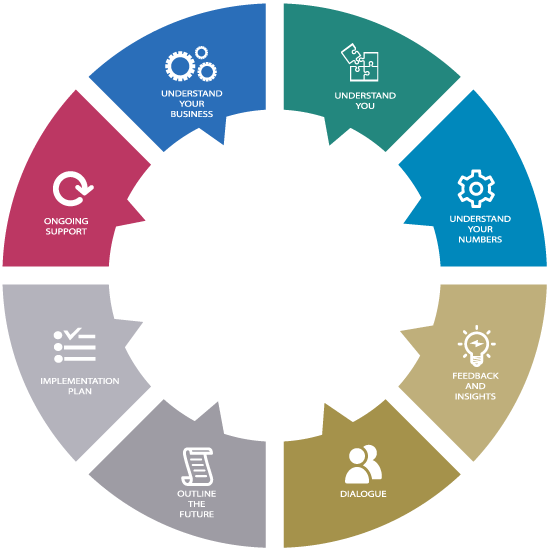
Understand your needs
We start by listening and getting to know your business, your challenges and what you want to achieve.
Continuous improvement
We value your feedback and regularly review our services to ensure we continue to deliver a high-quality experience and add value to your business.
Build a relationship
Trust is the foundation of every successful relationship. We work closely with our clients to build strong, long-term partnerships based on openness, respect and mutual understanding.
Confirm your expectations
Our aim is to help you maximise your business potential. We tailor our service to your needs, agree clear priorities and set a practical timetable for delivery.
Actively communicate
Good communication is at the heart of a successful working relationship. We keep you informed, share ideas and provide the insight you need to make confident decisions.
Our Process
Understand your needs
Agree your priorities
Communicate openly
Build a lasting relationship
Keep Improving
Straightforward and easy to deal with Adrian Mooy & Co provide an efficient, friendly and professional service - payroll, tax returns, annual accounts and VAT returns are always done on time. Eddie Morris
Call us on 01332 202660








First class! Super accountant! We have been with Adrian Mooy & Co since 1994. They provide a prompt, accurate & reliable service. There is always someone at the end of the phone to help and advise us. They have always delivered and we are more than happy to recommend them. Ian Cannon
Helpsheets
Payrolling benefits voluntarily in 2027/28
Mandatory payrolling is now being introduced in stages. From 6 April 2027 onwards, employers will be required to payroll:
- company cars;
- car fuel;
- vans;
- van fuel; and
- medical benefits.
For 2027/28, employers can opt to payroll all other benefits voluntarily, including taxable cheap employment-related loans and living accommodation benefits which cannot currently be payrolled. However, non-mandatory benefits can only be payrolled in 2027/28 if they have been registered for payrolling.
New service
The service previously used to register benefits in kind for payrolling has been closed down. It is to be replaced with a new service which is to be launched in November 2026. From that date, employers will be able to register benefits for voluntary payrolling from 6 April 2027. Where benefits are not registered for voluntary payrolling in 2027/28, the employer will continue to report them to HMRC after the year end on the employee’s P11D. To voluntarily payroll benefits in 2027/28, they must be registered before the start of the 2027/28 tax year.
2028/29
From 6 April 2028, all remaining benefits with the exception of taxable cheap employment-related loans and living accommodation benefits will be brought within mandatory payrolling.
The only benefits for which payrolling is voluntary in 2028/29 are employment-related loans and living accommodation benefits. Employers will be able to payroll these voluntarily if they have registered them for payrolling using the new service.
Running a business from home and reclaiming the VAT
The VAT consequences of working from home and what a business can and cannot recover VAT on.
If a business is run from home or has an office at home, it is entitled to claim back the VAT on any legitimate business expenses. This means that if the business incurs extra costs in running the business from home, it can reclaim the VAT on those costs, as well as a proportion of the running costs of the house.
For example, if a company's business operates from a director's home and the office takes up 20% of the floor space of the house, HMRC will allow it to reclaim 20% of the VAT on the utility bills such as gas and electricity.
The legislation states that the calculation of reclaimable VAT on mixed business and private use has to be fair and reasonable. Increased VAT recovery could be achieved by using different apportionments (e.g., floor area, number of rooms, time usage, etc.).
VAT on other additional costs
As well as day-to-day running costs, the business may pay for other legitimate business costs of running the business from home (e.g., decoration costs and furniture).
There's no problem claiming VAT back on the costs of making the office a comfortable place to work. This includes the cost of any office furniture, redecoration, carpets and even display items such as pictures on the wall. Obtain and retain VAT invoices to support any VAT claim in case of a VAT inspection and make sure they are treated as assets of the business. If the items are sold, VAT should be accounted for on the sale price.
Although a business can reclaim VAT on items bought to make the home office look good, avoid paintings, etc., that might increase in value, as the business could end up out of pocket. That's because the business will have to pay the VAT on the increased value when it stops using the asset in the business.
Some costs are more obviously business-related. If a business has a separate business phone or broadband line at home, it can reclaim 100% of the related VAT. But if there is only one connection for both private and business use, the business will have to make a fair and reasonable estimate of the VAT that can be reclaimed.
To reclaim VAT on domestic costs, they must be paid for by the business. This is relatively straightforward if it is a sole trader or partner as HMRC accepts that the individual and the business are one and the same. But directors must make sure the bills are in the name of their company. They must also reimburse the company for private use to avoid tax and National Insurance contributions problems.
HMRC will accept claims made through the expenses system; so a director can claim a fair proportion of them on their monthly expenses claim, even if the bill is not in the company's name.
Extensions and conversions
With more and more people now choosing to work from home, the question of what can be done with the VAT on the conversion and extension costs is becoming a common issue.
For example, a business may decide to build an extension or have a loft conversion to give sufficient office space to run the business. The office will contain the usual computers, desks, etc., and be decorated and furnished in line with the proposed use. In these circumstances, the VAT on these costs can be reclaimed. If it is through a limited company, get the invoices addressed to the business.
Practical tip
If a business is run from home, it should be able to reclaim the VAT on the direct business costs and on a fair and reasonable proportion of joint business and private costs.
Side hustles, online selling and the trading allowance
Whether you sell unwanted items on eBay or Vinted, rent out a property on Airbnb, freelance through online platforms, drive for a delivery app, earn money as a content creator, gardener, babysitter or even hire out personal equipment, it is important to understand when this extra income needs to be reported to HMRC.
The government has announced plans to increase the self-assessment reporting threshold for trading income from £1,000 to £3,000 within the current parliament, by 2029. This proposal is intended to reduce administration for people with small side businesses or occasional trading income. Importantly, the announcement does not increase the £1,000 trading allowance, therefore tax may still be payable on profits even where a self-assessment tax return is not required. HMRC intends to introduce a simplified online service for those who have tax to pay but are not required to complete a tax return.
What is the trading allowance?
The trading allowance allows individuals to earn up to £1,000 a year without paying tax on that income or reporting to HMRC, provided no other reporting requirements apply.
Calculation
Under trading allowance rules, taxable profits can be calculated by either:
calculating profits in the normal way using business income less allowable expenses and capital allowances, if applicable (the 'profit method'); or
claiming the £1,000 trading allowance instead of actual expenses ('partial relief').
Whichever method is used, taxable profits are subject to income tax and NIC where the relevant thresholds are met.
Other reasons for registration
Registration may also be worthwhile to protect a NIC record through voluntary Class 2 contributions (where eligible), demonstrate self-employed earnings for claims such as Maternity Allowance or where self-assessment is required for tax-free childcare claims.
The allowance has its limits
The trading allowance can only reduce taxable income to nil; it cannot create a trading loss.
Claiming the allowance may be beneficial if allowable expenses are less than £1,000. If expenses exceed £1,000, claiming actual costs will usually reduce the tax bill. However, if income is below £1,000, filing a tax return may still be worthwhile so that a trading loss can potentially be carried forward or, where permitted, relieved against other income.
The trading allowance cannot be claimed separately for a small side business if the individual already has other self-employment as the £1,000 limit applies to all trading income combined.
The allowance is also not claimable where trading income is received from:
a company that you or someone connected to you owns or controls;
a partnership in which you or a connected person has an interest; or
your employer or your spouse's or civil partner's employer.
Online platforms reporting to HMRC
Many people assume income earned through digital platforms goes unnoticed. However, under international reporting rules, online platforms such as eBay, Vinted, Airbnb, etc must collect and report information about certain sellers to HMRC. Similar reporting also applies to freelancers using online platforms, drivers and delivery workers, and content creators who receive payments through digital services.
For example, eBay reports to HMRC annually where a seller completes 30 or more transactions in a calendar year, or where total sales (after fees, commissions and cancellations are stripped out) reach €2,000 (currently about £1,710). These reporting thresholds do not determine whether tax is due; they simply determine when or whether the platform must provide information to HMRC. Therefore, a seller could be reported without owing any tax or could owe tax without triggering a platform report.
Practical point
The tax treatment depends on the nature of the activity, the individual’s total income and whether a profit is being made rather than simply selling unwanted personal possessions. As HMRC receives increasing amounts of information directly from online platforms, keeping good records will make it easier to determine whether income must be reported and ensure any deductions or reliefs available are claimed.
Ensuring VAT is charged correctly
VAT is often thought of as a relatively simple tax; if a business is VAT registered, 20% VAT is usually charged. However, in practice, the VAT system is more complicated. What is being supplied, who is doing the supplying/buying, where the supply takes place and whether particular conditions and evidence requirements are met determines whether a transaction is standard-rated, reduced-rated, zero-rated, exempt or outside the scope of VAT. Getting the distinction wrong can result in VAT being underpaid or overpaid and, potentially, interest and penalties being charged to the supplier.
Standard rate – 20%
The 20% standard VAT rate is the default tax rate. However, a business should not assume that a particular product or service is standard-rated simply because similar products are. Small differences in composition, presentation or use can mean a different tax rate or combination of tax rates should be charged. Such a distinction was considered in the famous ‘Jaffa case’ where HMRC challenged the VAT treatment of McVitie’s Jaffa cakes. The issue itself was simple – were Jaffa cakes cakes or biscuits? The distinction mattered because cakes are zero-rated for VAT, whereas a biscuit wholly or partly covered in chocolate is standard-rated. The Tribunal decided that Jaffa cakes had sufficient characteristics of cakes to be treated as cakes and therefore zero-rated.
Reduced rate – 5%
The reduced rate is 5% and applies to specifically defined goods and services. Common examples include certain domestic electricity and gas supplies. This reduced rate can also apply to certain qualifying work on existing buildings, such as particular conversions and the renovation or alteration of qualifying residential premises that have been empty for at least two years. In contrast, the construction of a qualifying new building can generally be zero-rated provided the detailed conditions are met.
Zero-rated – 0%
The important point to note regarding zero-rated supplies is that they are still taxable, but the rate is 0%. Examples include children's clothing and books and newspapers. The main advantage of making zero-rated supplies is that VAT on purchases can generally be reclaimed. Therefore, a business making entirely zero-rated supplies can be VAT registered and reclaim VAT on its purchases, despite charging its customers no VAT.
Exempt
With an exempt supply, VAT is not charged because the supply is specifically exempt from VAT. Examples include certain financial services and insurance. The crucial difference between a zero-rated supply and an exempt supply is that input VAT incurred in making the exempt supplies is generally not recoverable. Also, supplies do not count towards taxable turnover for the VAT registration threshold. Therefore, a business whose supplies are entirely exempt but with more than £90,000 turnover does not have to be VAT registered.
If a business makes both taxable and exempt supplies, it may be partially exempt, creating potentially complex rules for determining how much input VAT is recoverable.
Outside the scope
Transactions deemed ‘outside the scope’ are those which are not within the VAT system, so VAT does not apply. A typical example is a tip left by a customer in a restaurant. No VAT is due as it is not consideration for the restaurant's supply. However, the situation is different should a restaurant levy a compulsory service charge as it forms part of the consideration for the meal.
Getting it wrong
Getting the VAT rate designation wrong can affect the amount of VAT charged to customers, the amount of reclaimable VAT, whether the business needs to register for VAT and how figures are reported on the VAT return. Getting it wrong does not automatically result in a penalty where the business took reasonable care in preparing their VAT returns. However, where an error results from carelessness, the penalty can be up to 30% of the VAT underpaid, rising to 70% for a deliberate error and a maximum of 100% where the deliberate error was concealed. Interest may also be payable.
Practical point
The distinction between zero-rated and exempt supplies is particularly important. Both result in no VAT being charged to the customer, but only zero-rated supplies are taxable.
Is incorporation relief available to landlords?
Incorporation relief is a valuable relief that allows landlords to postpone the capital gains tax bill that may otherwise arise when transferring an unincorporated property business to a limited company.
The relief, which is no longer given automatically and must be claimed, applies where the business is transferred to a company wholly or partly in exchange for shares. To the extent that the gain relates to shares received in exchange, it can be rolled over such that the base cost of the shares is reduced by the gain. The gain does not crystallise until the disposal of the shares.
The relief applies when ‘a person who is not a company transfers to a company a business as a going concern, together with the whole of the assets of the business, or together with the whole of those assets other than cash, and the business is so transferred wholly or partly in exchange for shares issued by the company to the person transferring the business’.
Is there a business?
The relief is only available on the transfer of a business as a going concern.
The legislation does not define ‘business’ for the purpose of the relief, so it takes its everyday meaning. Guidance on HMRC’s interpretation of the phrase can be found in their Capital Gains Manual at CG65715.
It should be noted that the terms ‘business’ and ‘trade’ are not synonymous – ‘business’ is treated as including a trade, but the definition is wider.
The issue of the meaning of the term ‘business’ in relation to incorporation relief was considered in Ramsay v HMRC [2013] UKUT 0226 (TCC) in which Judge Berner set out the following factors which suggest that there is a business:
- Is there a ‘serious undertaking earnestly pursued’ or is there a ‘serious occupation’?
- Is there an occupation or function actively pursued with reasonable or recognisable continuity?
- Is there a certain amount of substance in terms of turnover?
- Are the activities conducted in a regular manner and on sound and recognised business principles?
- Are they of a kind which, subject to differences of detail, are commonly made by those who seek to profit from them?
An important additional factor is the extent of the activities.
The First Tier Tribunal found against Mrs Ramsay because they considered that the activities that she undertook in relation to her property were ‘normal and incidental to the owning of an investment property’.
The Upper Tribunal found this was the wrong test. Rather, ‘it is the degree of activity as a whole which is material to the question whether there is a business, and not the extent of that activity when compared to the number of properties or lettings’.
Mrs Ramsay worked on the property for about 20 hours per week. This was found by the Upper Tribunal to indicate the carrying on of a business. The relief was therefore available.
Based on this decision, HMRC operate a rule of thumb and will accept that incorporation relief is available where an individual personally spends 20 hours or more a week on undertaking activities that are indicative of a business.
However, the Upper Tribunal recently considered the meaning of ‘business’ in HMRC v GCH Corporation Ltd and others [2026] UKUT 00219 (TCC). Although the decision does not relate to incorporation relief, it provides useful insight into the approach used to decide whether there is a ‘business’.
The decision highlights the importance of the statutory context and, within this context, the role of case law. Here, there was no ‘hours per week test’; rather, the question was determined by reference to wider factors.
Consequently, landlords relying on the ’20 hours per week’ test to support a claim for incorporation relief would be wise to consider the bigger picture and whether, in the statutory context, the degree of activity as a whole supports the conclusion that there is a transfer of a business as a going concern.
What is the process should a business deregister or change its VAT scheme?
HMRC records that during 2023/24, VAT deregistrations outnumbered new registrations by approximately 35,000 – the vast majority due to the closure of the business. However, some businesses deregister because they are no longer required to be VAT registered. How and when a business can deregister and/or leave a particular scheme depends on the type of scheme.
The main VAT schemes are the standard accounting, cash accounting, annual accounting and flat rate schemes. In addition, various retail VAT schemes exist including VAT margin schemes (where instead of paying VAT based on the item’s selling price, the tax is based on the difference between the purchase price and the selling price).
A business must cancel its VAT registration if it ceases to trade or otherwise ceases to be eligible for VAT registration. Notification of deregistration is required within 30 days of ceasing to make taxable supplies, effective from the date of cessation or later, as agreed with HMRC. The business must continue to account for VAT until that date. However, voluntary registration is still possible if its taxable turnover is below the current cancellation limit of £88,000 so long as a taxable trade continues.
Cash accounting and annual accounting schemes - The joining threshold for both schemes is currently £1.35 million. HMRC does not need to be notified if the business leaves the cash accounting scheme but will need to be on leaving the annual accounting scheme. A business must leave either scheme at the end of any VAT period (a year in the case of the annual scheme) where the taxable sales for the previous 12 months have exceeded £1.6 million excluding VAT (although leaving the schemes voluntarily is possible at any time). If a business has taxable sales in excess of £90,000 it will remain within the VAT process, accounting for VAT using the standard accounting scheme.
Some businesses may temporarily exceed the leaving threshold and if so, they can remain within the scheme if they believe taxable sales in the next 12 months will be less than the joining threshold, i.e. £1.35 million excluding VAT. The ‘one off’ increase must not have happened previously and is not expected to happen again. IN addition, the sale must have arisen from a genuine commercial activity; again, HMRC is not required to be notified.
Annual accounting scheme - A business must leave the annual accounting scheme when turnover exceeds £1.6 million, irrespective as to whether the increase is temporary. Instalment payments will cease, and a final return is due for the shorter period. Payments are reconciled against payments already made, so that a balancing payment may be payable or a refund received. Leaving the scheme is not deregistration.
Flat rate scheme - A business can opt to leave the scheme voluntarily at any time but must leave if gross sales including VAT have exceeded £230,000 on the anniversary date of joining the scheme or there are reasonable grounds to believe that income for the next 30 days will exceed that amount (capital asset sales excluded). However, if total sales including VAT are expected to be less than £191,500 in the next 12 months, application can be made to remain within the scheme.
Practicalities - Many owners of deregistered businesses are unaware that they must account for output tax on stock and any assets on which VAT was claimed, which the business retains at the date of deregistration, and where the VAT due exceeds £1,000. VAT due on deregistration is effectively a deemed supply by the business to itself. The legislation treats relevant stock and assets as supplied immediately before cancellation.
When a VAT registration is cancelled, VAT can be reclaimed on goods or services that were supplied when the business was VAT registered but not included in a previous VAT return. VAT on any services supplied after the VAT registration was cancelled can also be reclaimed if they were connected with the taxable activities (e.g. accountancy fees relating to when the business was VAT registered). Bad debt relief may also be possible on goods or services supplied when the business was VAT registered (this claim must be made within four years and six months, at the end of the accounting period). There is an online form to use for such a reclaim.
Practical point - Deregistration is not always beneficial. Deregistration may leave the business unable to recover input VAT, and VAT-registered customers may prefer to deal with a registered supplier.
Reclaiming VAT on a car – notoriously difficult to claim

The VAT tax rules are clear - input tax cannot be claimed on the purchase of a new or used car that is made available for any private use. However, input tax can usually be claimed on cars used as a tool of a trade such as by a driving school, taxi firm or private car hire business, even if there is minor private use.
This strict rule was tested in a recent tax case of Maddison and Ben Firth T/A Church Farm v HMRC 2002. This case also underlines the importance of documents when submitting a claim to HMRC.
Mr and Mrs Firth were in business registered for VAT as 'subcontracting glam/camping, weddings and events' - mainly organising weddings and other events. The business claimed input tax on the purchase of two new cars, on the basis that they were used exclusively for business purposes and not available for private use. However, the Tribunal agreed with HMRC that there was insufficient evidence to prove a business-only intention. Importantly they came to this conclusion based on the insurance policy which included insurance for 'Social, Domestic and Pleasure' (SDP). Although Mr Firth explained that it was very difficult to obtain insurance without SDP the option was still available and that was enough to refuse the claim. The Tribunal stated that fact that the insurance policies did not cover the carrying of passengers on a commercial charge basis was an important point and refused the claim. Relevant factors quoted in the case were 'who has access to the car and when; what is the likelihood that the car will never be used for mixed business and private journeys; what is the availability of the car; whether the user keeps a log of journeys; whether the car is insured for private use; and whether the vehicle has any peculiar feature or adaptations for a particular kind of business use?'
In addition, although there was a valid council issued private operator licence, private hire was not covered by the policy. It also did not help Mr Firth's case that although an Audi TT has five seats it is, in effect, a two-seat car and as such not a practical car for private hire (one of the exceptions to the VAT rules).
Finally, HMRC refused a claim for the VAT input on a personalised number plate fixed to a motorcycle, finding that it was personalised to include Mr Firth’s first name. The claim was for business advertising but HMRC disagreed and refused the claim as the number plate (BS70 BEN) did not refer to the business named 'Church Farm'.
As ever in such cases, looking at the facts, this case should probably not have reached as far as a Tribunal Hearing. However, this case underlines the importance of 'intention' and of documents in supporting any claim for input VAT.
Taxation of dividends in 2026/27
As announced at the time of the 2025 Autumn Budget, the ordinary and upper dividend tax rates are increased by two percentage points from 6 April 2026. The additional dividend rate remains unchanged. The increase will affect those with investments in shares who receive dividend income and also shareholders in personal and family companies who extract profits by way of dividends.
All taxpayers, regardless of the rate at which they pay tax, receive a dividend allowance. This is set at £500 for 2026/27, unchanged from the previous year. The dividend allowance acts as a nil rate band, and dividends sheltered by the allowance are received free of tax. However, the allowance uses up part of the tax band in which it falls.
Where dividends are not sheltered by the dividend allowance, they are treated as the top slice of income and taxed at the dividend tax rates. The dividend ordinary rate applies to dividends falling within the basic rate band and is set at 10.75% for 2026/27 (up from 8.75% for 2025/26). Dividends falling in the higher rate band are taxed at the dividend upper rate which is set at 35.75% for 2026/27 (up from 33.75% for 2025/26). Where dividends fall in the additional rate band, they are taxed at the dividend additional rate, which remains at 39.35% for 2026/27.
The tax rises mean that taxpayers paying tax on their dividends at the ordinary or upper dividend rates will pay an additional £20 in tax for every £1,000 of dividend income in 2026/27.
Example
John is retired. He receives a pension of £20,000 each year. He has invested in shares over the years and receives dividends of £30,000 a year which boost his retirement income.
For 2026/27, he will pay tax of £3,171.25 on his dividend income. The first £500 of dividends is tax free, being sheltered by the dividend allowance of £500. The remaining £29,500 is taxed at the dividend ordinary rate of 10.75%. After tax, John retains £26,828.75.
In 2025/26, he also received dividend income of £30,000. However, his tax bill for that year was £2,581.25, leaving John with £27,418.75 after tax.
As a result of the rise in the dividend ordinary rate, John is £590 worse off in 2026/27 (£29,500 @ 2%).
Impact on profit extraction
For directors of personal and family companies, a popular profit extraction strategy is to take a salary equal to the personal allowance and to extract further profits as dividends. Where the dividends are taxed at the ordinary or upper dividend rates, the director/shareholder will pay more tax on those dividends than in 2025/26.
Example
Julia runs a personal company. She prepares accounts to 31 March each year. In the year to 31 March 2027, she expects to make a profit of £80,000 after tax, having taken a salary of £12,570 from the company. She extracts the profits as dividends. Apart from the salary from the company, she has no other income.
The first £500 of the dividends are sheltered by her dividend allowance. The dividend allowance uses up £500 of the basic rate band, leaving £37,200 available.
The first £37,200 of the remaining dividend falls in the basic rate band and is taxed at the dividend ordinary rate of 10.75% – a tax hit of £3,999.
The remaining £42,300 of the dividend falls in the higher rate band and is taxed at the dividend upper rate of 35.75% – a tax hit of £15,122.25.
Consequently, Julia pays tax of £19,121.25 on her dividend of £80,000, leaving her with £60,878.75.
Assuming she also took a dividend of £80,000 in 2025/26, she would have paid tax of £17,531.25, leaving her with £62,468.75. As a result of the increase in the ordinary and upper dividend tax rates, she is £1,590 worse off in 2026/27 (£79,500 @ 2%).
Taxpayers whose dividends are taxed at the dividend additional rate are unaffected by these changes.
High Value Council Tax Surcharge
From 6 April 2028, a new charge, the High Value Council Tax Surcharge (HVCTS) will apply to owners of residential property in England valued at £2 million or more. The new tax is commonly referred to as the ‘mansion tax’. The charge will apply in addition to the existing council tax charge.
The government estimate that fewer than one per cent of properties will fall within the scope of the charge.
Liability for the charge will fall on the homeowner rather than the occupier where the property is not owner-occupied. To determine whether a property is within the scope of the charge, the Valuation Office will conduct a targeted valuation exercise. Revaluations are to be conducted every five years. Properties valued at more than £2 million will be placed in a band according to their value, with a charge set for each band. The charging structure for 2028/29 is set out below.
Value HVCTS
£2m to £2.5m £2,500
£2.5 to £3.5m £3,500
£3.5m to £5m £5,000
£5m plus £7,500
The charge will increase each year in line with rises in the CPI. It will be administered by local authorities alongside council tax.
Consultation
Earlier this year, the Government consulted on the detailed design of the charge. The consultation document set out:
- the design of the HVCTS;
- how the ‘owner’ should be defined;
- the proposed support mechanism for those who cannot pay;
- the proposed list of property level discounts and exemptions;
- the billing and the administration process;
- the process by which a homeowner can challenge their banding or their liability;
- the enforcement mechanisms for the charge;
- an assessment of the impact on those with protected characteristics; and
- the approach to valuations.
At the time of writing, the government had yet to respond to the consultation.
The legislation to give statutory effect to the HVCTS is to be included in a future finance bill.
Useful Links
Tax refunds for more than one tax year
HMRC are changing the way that tax refunds are made to the majority of taxpayers who make a multi-year P800 tax refund claim. Claims must usually be made no later than four years from the end of the tax year to which the claim relates.
Employees making a claim for a multi-year tax refund will need to request their repayment using HMRC’s digital services. They will no longer receive the repayment automatically by cheque. This change brings multi-year refunds in line with the wider P800 repayment process under which taxpayers must take action in order to receive money that they are owed by HMRC.
Once a multi-year claim has been processed, the taxpayer will receive a P800 tax calculation letter which will ask them to request their repayment. The quickest way to do this is through their HMRC personal account or via the HMRC app.
However, the taxpayer does not need to be fully set up for HMRC’s online service in order to request their repayment as they can request their refund using the online service on the Gov.uk website at www.gov.uk/tax-overpayments-and-underpayments rather than signing in through the Government Gateway. To do this, they will need the unique reference number in their P800 letter and their National Insurance number.
Taxpayers who are digitally excluded or who prefer a cheque can still get one, although they will need to wait longer for their money.
Child benefit and paying the HICBC
The High Income Child Benefit Charge (HICBC) claws back child benefit if the recipient and/or their partner earns more than the threshold. For 2026/27, the charge applies once adjusted net income exceeds £60,000. Where both the recipient and their partner have adjusted net income of more than £60,000, the charge is levied on the one with the highest income. The person liable to pay the charge may not be the person who received the child benefit.
The charge claws back 1% of the child benefit for the tax year for every £200 by which adjusted net income exceeds £60,000. Once adjusted net income reaches £80,000, the HICBC is equal to the child benefit for the year. For 2026/27, child benefit is set at £27.05 per week for the eldest child and £17.90 per week for each additional child.
Opting not to receive the benefit
Where the HICBC will claw back all the child benefit for the tax year (which will be the case where adjusted net income is £80,000 or more), it may be preferable not to receive the child benefit rather than receiving it and paying it back. A person can opt out of receiving child benefit either by using the online service or completing the online form.
It is important to claim child benefit then opt out (rather than simply not claiming it) to benefit from the associated National Insurance credits, particularly where the claimant would not otherwise secure a qualifying year for state pension purposes.
Paying the charge through Self-Assessment
It used to be the case where a taxpayer needed to pay the HICBC, they had to register for Self-Assessment if not already registered and pay the charge through the Self-Assessment system. However, with the introduction of the PAYE service, the charge is now only payable through Self-Assessment where the person needs to send in a Self-Assessment tax return for another reason (as will be the case, for example, if they have trading, property or investment income) or if they have not paid the charge by 31 January after the end of the tax year to which it relates.
Paying the charge through PAYE
A new service was launched last year which allows taxpayers to pay the HICBC through PAYE, removing the need to register for Self-Assessment solely to pay the HICBC. The taxpayer’s tax code will be adjusted to collect the HICBC through PAYE. Taxpayers must register to use this service.
However, the charge can only be paid through PAYE if all the following apply:
- the taxpayer does not need to file a Self-Assessment return for another reason;
- they are paying the tax for the current or previous tax year onwards; and
- it is before 31 January after the end of the tax year to which the charge relates.
A person who previously paid the charge through Self-Assessment can switch to paying through PAYE by contacting HMRC to be removed from Self-Assessment and to register to pay the charge through PAYE. If a person needs to be within Self-Assessment for another reason, the charge must be paid through Self-Assessment – it cannot be paid through PAYE.
Salary or dividends: Where are we now? - Part 1
Salary or dividends: Where are we now?
The merits of extracting profits from a personal or family company in the form of salary or dividends.
A company is a separate legal entity distinct from the shareholders who own it. This means that where a business is operated through a personal or family company, the profits must be extracted if they are to be used personally outside the company.
There are various ways of extracting profits, including taking a salary and paying dividends. Here, we take a look at the tax implications of each.
However, it should be noted at the outset that these are not the only ways of extracting profits, and there is no ‘one-size-fits-all’. The optimal approach will depend on the individual’s personal circumstances.
Salary - Taking a salary can be a good way of taking profits out of the company, particularly if the recipient does not have the 35 qualifying years needed to secure a full state pension and their personal allowance remains available.
A year will be a qualifying year for state pension purposes if earnings are at least equal to 52 times the National Insurance contributions (NICs) weekly lower earnings limit for the tax year. For 2026/27, the lower earnings limit is set at £129 per week, meaning that a salary of at least £6,708 will provide a qualifying year.
The good news from the director’s perspective is that where the salary is between the lower earnings limit and the primary threshold, there is no employee’s Class 1 NICs to pay, but the year is a qualifying year, meaning the director secures entitlement to 1/35th of the state pension each year for free, as long as when they reach state pension age they have at least 10 qualifying years. For 2026/27, the primary threshold is aligned with the personal allowance at £12,570.
If the director already has 35 qualifying years or will do so from other sources by the time that they reach state pension age, there is no benefit in paying a salary of £6,708 or above unless that is otherwise an efficient way to extract the profits.
Employer’s NICs is a different matter. For 2026/27, at £5,000, the main secondary threshold is less than the primary threshold, and where the salary paid exceeds £5,000 (which will be the case where a salary is paid which is sufficient to secure a qualifying year for state pension purposes), unless the employment allowance (EA) is available or one of the higher secondary thresholds applies, there will be employer’s NICs to pay where the salary is more than £5,000 – at the rate of 15% of the excess.
The EA is not available where the sole employee is also a director, which is generally the case in a personal company. If EA is available, as may be the case in a family company where at least one other person has earnings above the secondary threshold, there will be no employer’s NICs to pay where earnings are sheltered by the allowance.
It should be remembered that the annual thresholds are used to work out the liability on a director’s earnings regardless of how frequent they are paid.
From a tax perspective, much will depend on whether the director shareholder’s personal allowance is available. Any salary sheltered by the personal allowance can be paid tax-free. Thereafter, it is taxed at 20% where it falls in the basic rate band, 40% where it falls in the higher rate band and at 45% where it falls in the additional rate band.
From the company’s perspective, salary payments and any associated employer’s NICs are deductible in calculating the profits chargeable to corporation tax.
Salary or dividends: Where are we now? - Part 2
Dividends - Dividends are a distribution of profits and are paid out of profits, which have already suffered corporation tax at between 19% and 25%, depending on the level of the company’s profits. Rises in both dividends tax rates and corporation tax rates in recent years have reduced the attractiveness of dividends. However, there is no NICs to pay.
There are company law rules governing the payment of dividends, which must be adhered to. Dividends can only be paid out of retained (post-tax) profits. If the company has no retained profits, it cannot pay a dividend.
Further, where there is more than one shareholder for a class of shares, dividends must be paid in proportion to shareholdings, which restricts the ability to tailor dividends to personal circumstances. However, this can be overcome by having an ‘alphabet’ share structure where there are two or more shareholders such that each shareholder has their own class of shares (e.g., A ordinary shares, B ordinary shares, etc.). Different dividends can then be declared for each class of share.
All individuals receive a dividend allowance, which is set at £500 (for 2026/27) regardless of the rate at which they pay tax. The dividend allowance acts as a nil-rate band and dividends sheltered by the allowance are taxed at a zero rate. However, unlike the personal allowance, the dividend allowance uses up part of the band in which it falls. Thereafter, dividends falling within the basic rate band are taxed at the dividend ordinary rate, set at 10.75% for 2026/27; dividends falling within the higher rate band are taxed at the dividend upper rate, set at 35.75% for 2026/27 and dividends falling within the additional rate band are taxed at the dividend upper rate, set at 39.35% for 2026/27. Dividends are treated as the top slice of income.
Crunching the numbers - There is no easy answer to which is best; it will depend on the individual’s personal circumstances and the rate at which the company pays corporation tax.
The following examples look at extracting £10,000 of profits.
(a) Salary
If the salary is sheltered by the personal allowance and the EA is available, the director will receive £10,000 free of tax and NICs.
If the salary is sheltered by the personal allowance and the EA is not available, the £10,000 will be reduced by employer’s NICs, so the director will receive £8,696 free of tax and NICs.
Where a salary of £12,570 has already been paid, extracting a further £10,000 as a salary will cost a basic rate taxpayer £2,000 in tax and £800 in employee’s NICs if the EA is available, leaving the director with £7,200. If the EA is not available, the salary of £8,696 (after employer’s NICs) will be reduced by tax of £1,739.20 and employee’s NICs of £695.68, leaving £6,261.12.
Where the director is a higher rate taxpayer, they will pay tax of 40% and NICs of 2%. Where the EA is available, this will reduce the £10,000 salary by £4,000 of tax and £200 of NICs to £5,800. Where the EA is not available, the salary of £8,696 is reduced by tax of £3,478.40 and NICs of £173.92 to £5,043.68.
As both salary and employer’s NICs are deductible for corporation tax purposes, extracting £10,000 of profits as a salary reduces the company’s corporation tax bill by between £1,900 and £2,500, depending on the rate at which they pay tax.
(b) Dividends
Dividends are paid from post-tax profits. If the company wishes to extract £10,000 of profits as a dividend, there will be £8,100 available to pay out as a dividend if the company pays tax at 19%.
Where the dividend is sheltered by the personal allowance, there will be no tax to pay, so the shareholder retains £8,100. Once the personal allowance has been used, if the dividend allowance is available, a basic rate taxpayer will pay a further £817 in tax (leaving them with £7,283); a higher rate taxpayer will pay £2,717 in tax (leaving them with £5,383) and an additional rate taxpayer will pay £2,990.60 in tax (leaving them with £5,109,40).
If the company pays corporation tax at 25%, the dividend will only be £7,500.
A mix of the two - Although the optimal profit extraction strategy will depend on personal circumstances, a popular route where the personal allowance is available is to pay a salary of £12,570 and extract further profits as dividends.
Practical tip - Paying a salary and taking dividends both have their merits when it comes to extracting profits from a personal company. Crunch the numbers to see which is best for you in the circumstances.
Making quarterly returns for MTD for ITSA
Making Tax Digital for Income Tax Self-Assessment (MTD for ITSA) is now a reality for individuals who had combined trading and property income of at least £50,000 in 2024/25. They will now need to keep their records digitally and file their first quarterly return by 7 August 2026.
The quarterly updates are sent to HMRC digitally using software that is compatible with MTD for ITSA. Quarterly updates must be submitted for each source of self-employment income and each source of property income.
The quarterly updates will contain:
- the digital records for self-employment and property income and expenses for the previous three months; and
- the digital records which have already been created since 6 April 2026 and any corrections to those records.
After sending each update, the individual will be able to see an estimate of their tax bill.
Details of the categories under which the information provided in the quarterly update should be recorded can be found online at: www.gov.uk/government/publications/update-notice-for-making-tax-digital-for-income-tax/making-tax-digital-for-income-tax-update-notice.
If the individual has other income, such as income from employment or a pension or investment income, they do not need to report this in the quarterly update. Instead, other income is reported in the final declaration. This is the point at which reliefs are claimed too.
Update periods
Individuals have a choice whether to prepare quarterly updates using the standard periods, which correspond with tax months, or the calendar update periods.
Taxpayers can choose to send updates more frequently if they wish, such as monthly.
Missed deadlines
Under the penalty regime that applies under MTD, where a deadline is missed, a penalty point is issued. Once the penalties reach the penalty threshold, which for quarterly return is four points, a £200 penalty is levied.
However, HMRC have stated that for taxpayers who are mandated for MTD for ITSA from 6 April 2026, they will not issue penalty points for late quarterly updates for the first 12 months.
How to spot bad tax advice
HMRC have issued a warning that not all tax advice online is accurate. ‘Finfluencers’ (financial influencers) often present tax advice as ‘quick wins’ without covering the rules. This can be misleading as people may take action without being aware of the risks or whether the featured ‘win’ is appropriate to their circumstances.
HMRC have published guidance to help people avoid being caught out by bad tax advice.
Spotting tax avoidance
Tax avoidance usually involves artificial transactions that serve no real purpose other than claiming falsely to reduce tax. Anyone involved in a tax avoidance scheme will have to pay the tax that they should have paid plus interest, and maybe penalties, so such schemes are best avoided.
One way to prevent being caught up in a tax avoidance scheme is to understand how you are being paid. Check your contract and payslips to ensure you are paying the correct amount of tax and National Insurance. Warning signs that all is not well include receiving more money in your bank account than that shown on your payslip or receiving untaxed income, which may be described as a loan or a capital payment.
Remember, you are responsible for paying the correct amount of tax, even if you appoint someone to handle your tax affairs.
Anyone that thinks that they may be involved in a tax avoidance scheme is advised to contact HMRC as soon as possible.
Umbrella companies
Contractors may be employed through an umbrella company. These are often used by recruitment agencies to pay temporary workers. The umbrella company employs and pays the worker but does not find the work – this is the role of the recruitment agency. To check that the umbrella company is not operating a tax avoidance scheme, the worker should check that they have paid the correct amount of tax and National Insurance. HMRC have a tool which can be used for this purpose which is available on the Gov.uk website.
They should also check their payslip and be alert for signs of extra payments which may not have been taxed.
Reporting a tax avoidance scheme
Anyone that has been encouraged to get involved in a tax avoidance scheme, is aware of a tax avoidance scheme or knows of someone selling a tax avoidance scheme should report it to HMRC.
Claiming expenses
It is easy to get caught out by a tax refund company offering to make tax relief expense claims on your behalf in return for a fee. This might seem like an easy option. However, HMRC are keen to point out that it is easy to check whether you are eligible and to make a claim if you are. Doing it yourself means that you get to keep the full amount of any money that you are owed. The guidance explains when a claim can be made and how to make a claim with HMRC.
Remember, if something sounds too good to be true, it probably is.
Keeping digital records for MTD
One of the key requirements under Making Tax Digital for Income Tax Self-Assessment (MTD for ITSA) is the need to keep digital records of income and expenses. A digital record is a record of income or an expense that is created and stored using software that is compatible with MTD for ITSA.
There are different software options available. A landlord within MTD for ITSA can either choose a single software package that does everything or different software products that work together. For example, a landlord could record income and expenses in a spreadsheet that is linked by software (bridging software) to another package for submitting returns to HMRC. It is important to note that where more than one product is used, they are linked digitally. It is not permissible to enter figures manually or to cut and paste from one program to another.
Information that must be recorded
A landlord within MTD for ITSA will need to keep records of property income, such as rent, premiums for the grant of a lease, reverse premiums and inducements, and property expenses, such as repairs, maintenance and cleaning, digitally.
The landlord will need to record the following in their digital records:
- the amount;
- the date on which it was received or incurred; and
- the category into which it falls.
The income and expenditure categories used for MTD for ITSA are the same as for the Self-Assessment tax return.
Different property businesses
If a landlord has both a UK property business and an overseas property business, they will need to keep separate digital records for each business.
Jointly let properties
A landlord with income from jointly let properties only need include their share of the income and the expenses. There is an easement which allows landlords with income from jointly owned properties to keep less detailed digital records.
Turnover of under £90,000
If the landlord’s total property turnover is less than £90,000, they can choose to categorise their digital records in less detail. If a landlord has income from residential lettings, they can record only whether a transaction is an income or an expense, and for expenses, whether the expense is a restricted finance cost.
Property income allowance
Landlords claiming the property income allowance do not need to record this in their digital records. Instead, it is claimed at the end of the tax year when the position for the year is finalised.
SDLT on mixed-use property
Stamp duty land tax (SDLT) is payable on the purchase of a property in England or Northern Ireland.
There are different rates for residential properties (with a 5% supplement applying to second and subsequent residential properties) and non-residential properties. The non-residential rates also apply to mixed-use properties. The starting point for residential properties is than for non-residential properties and the rates are higher and the rates applicable to residential properties are higher. Thus, the SDLT bill will be lower for a mixed-use property than for a residential property of the same price.
Is the property a mixed-use property?
The fact that part of a property is used for business will not in itself make a property a mixed-use property. HMRC draw a distinction between the use of certain rooms for business in what otherwise would be a dwelling (for example, the use of one room as a home office) and a building containing residential accommodation which has been divided into separate areas, one or more of which is used as commercial or business premises (for example, where part of a house has been converted into a shop).
Where a room in a house is used as a home office or similar, the room usually remains suitable for use as part of the dwelling house. Consequently, the property is a dwelling house not a mixed-use property and as such the residential stamp duty rates apply. Using the dining room as an office does not make a dwelling a mixed-use property.
Where the property is converted, or used without specific conversion, as part residential accommodation and part commercial and sold as a single interest, the position is more nuanced. Where part of the building is set aside for day-to-day commercial use and that part is used separately from the parts used for accommodation, HMRC will accept that the parts used commercially are not part of the dwelling. Consequently, the property is a mixed-use property and the non-residential SDLT rates will apply. An example here would be a house in which two rooms are dedicated to use as a hairdressers; the rooms converted into the hairdressers are not part of the living accommodation.
It is important to note that the use of the rooms does not in itself determine whether the property is a mixed-use property; the degree of conversion and the degree of separation from the living accommodation are key. If the rooms used commercially can easily be incorporated into the residential parts of the building without the need for any adaptation, they will remain part of the dwelling house and the property will not be a mixed-use property for SDLT purposes. However, if the parts used commercially have been converted in such a way that the rooms are not suitable for living accommodation (for example, where part of the property has been converted into a shop, a separate entrance and the installation of shelving, fridges etc.), then the part so converted will no longer be suitable for use as living accommodation; the property will be a mixed-use property and the non-residential SDLT rates will apply.
Mileage allowance payments

The approved mileage allowance payments (AMAP) system allows employers to make tax-free mileage allowance payments to employees who use their own vehicles for work. The payment is tax-free as long as it does not exceed the ‘approved amount’. This is the number of business miles in the tax year multiplied by the approved rate for the vehicle in question.
Different rates are set for cars and vans, motorcycles and cycles. Additionally, for cars and vans there are two rates – a higher rate for the first 10,000 business miles in the year and a lower rate for any further business miles in the tax year.
The rate for the first 10,000 business miles in a car or a van was increased from 45p per mile to 55p per mile for 2026/27. The other rates were unchanged.
Consequently, the approved mileage rates for the 2026/27 tax year are as follows
Cars and vans
First 10,000 business miles 55p per mile
Subsequent business miles. 25p per mile
Motorcycles 24p per mile
Cycles 20p per mile
It is important to note that the approved amount is calculated for the tax year as a whole, rather than for each individual journey.
Payments not exceeding the approved amount - As long as the payment does not exceed the approved amount, the payment can be made tax-free. If the amount paid is less than the approved amount, the employee can claim tax relief for the shortfall.
Example 1 - Andy drives 15,000 business miles in the 2026/27 tax year. His employer pays a mileage rate of 45p per mile for all business miles. Andy receives a payment of £6,750 (15,000 miles @ 45p per mile).
The approved amount is £6,750 ((10,000 @ 55p per mile) + (5,000 @ 25p per mile)). As the amount paid does not exceed the approved amount, the payment can be made tax-free.
Example 2 - Ben drives 6,000 miles in the 2026/27 tax year. His employer pays a rate of 50p. Ben receives £3,000. The approved amount for 2026/27 is £3,300 (6,000 @ 55p). In this case, the payment made to Ben of £3,000 is less than the approved amount of £3,300. Ben can claim tax relief for the shortfall.
Amount paid exceeds the approved rate - The approved amount is the maximum amount that can be paid tax-free, even if it is possible to demonstrate that actual costs exceed the approved amount. Where the amount paid exceeds the approved amount, the excess is taxable.
Example 3 - Callum uses his own van for work. His employer makes mileage payments for business travel at the rate of 55p per mile for mileage. In 2026/27, Callum uses his own van for 25,000 miles. He receives payments of £13,750 (25,000 @ 55p per mile).
The approved amount is £9,250 ((10,000 miles @ 55p per mile) + (15,000 miles @ 25p per mile)). As the amount paid exceeds the approved amount, Callum is taxed on the excess of £4,500.
National Insurance - For National Insurance the higher rate for cars and vans (55p per mile for 2026/27) applies to all business miles in the tax year, not just the first 10,000.
Using FHL losses
The former tax regime for furnished holiday lettings (FHL) came to an end on 5 April 2025. Prior to this date, properties which qualified as FHLs were kept separate from other lets. This meant that where a loss was made on FHL, that loss could only be carried forward and set against future profits from the same FHL business.
However, from 6 April 2025 onwards, FHLs are treated in the same way as other residential lets. This means that income and expenses from properties let as furnished holiday accommodation are amalgamated with rental income and expenses from other properties owned by the same person in the same capacity to arrive at the profit or loss for the property business as a whole.
Where the former FHL business had unrelieved losses on 6 April 2025, these losses can be set against future profits from the combined property business, regardless of whether those profits derive from holiday lets, other residential lets or commercial lets.
Example
Georgina lets out two flats on long-term lets. She also lets out two holiday cottages as furnished holiday accommodation through Airbnb.
On 6 April 2025, she has unrelieved losses from her former FHL business of £12,000. The residential lets have always made a profit. She owns all the properties outright.
For 2025/26, the income and expenses in respect of each property are as follows:
Property Rental income Expenses
Flat 1 £20,000 £4,000
Flat 2 £12,000 £2,500
Cottage 1 £16,000 £8,500
Cottage 2 £5,000 £7,000
Total £53,000 £22,000
The profit for the property rental business is £31,000.
Georgina is able to set the losses brought forward from the former FHL business against the profit of the amalgamated property business, reducing the taxable rental profit to £19,000. It does not matter that in isolation she only made a profit of £5,500 from her holiday cottages. Relief for the loss is claimed in her 2025/26 tax return.
Contact
Whether it is answering questions, making an appointment, or pointing you in the right direction, we look forward to hearing from you.



We just need a few details and we'll be in touch shortly.
Adrian Mooy & Co is the trading name of Adrian Mooy & Co Ltd. Registered in England No. 05770414.
Registered office: 61 Friar Gate, Derby, Derbyshire, DE1 1DJ T: 01332 202660
Adrian Mooy & Co Ltd - 61 Friar Gate Derby DE1 1DJ - adrian@adrianmooy.com